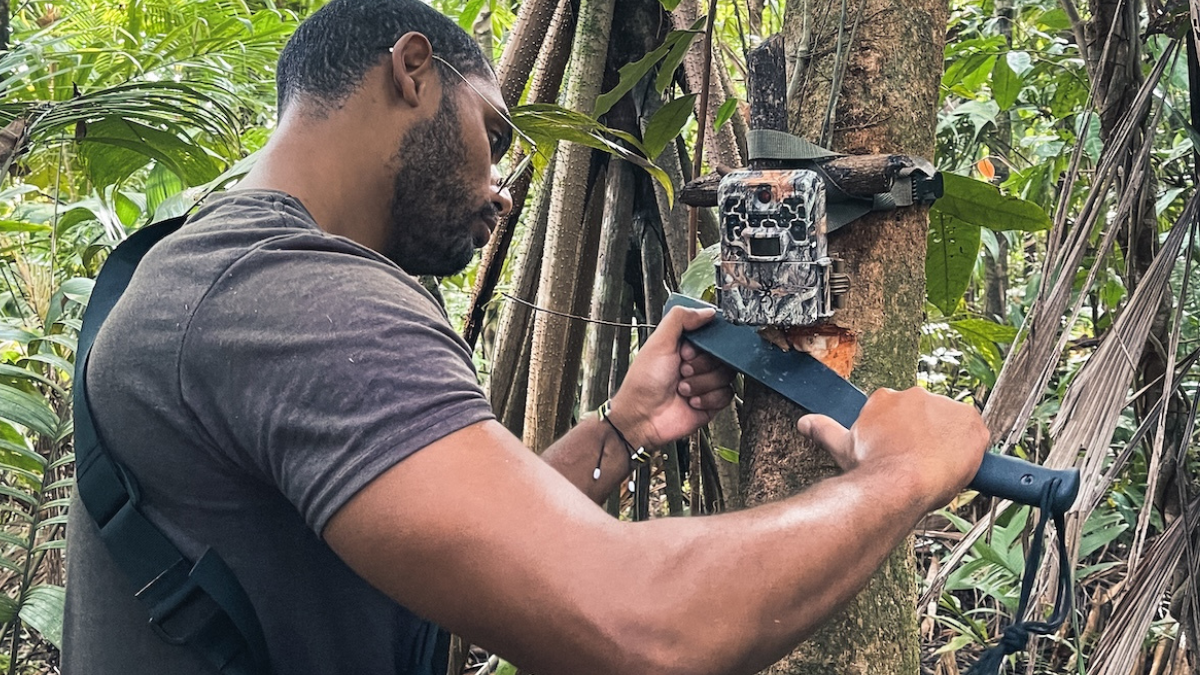
Somewhere in the forest, fastened to a tree you’d walk straight past, a small weatherproof box is waiting. It has been waiting, perhaps, for weeks. Then a branch shifts, an animal crosses the sensor’s field, and a camera fires — silent, instant, invisible to the creature passing through. No researcher crouched in the undergrowth. No disturbance to natural behavior. Just an image, a timestamp, and a piece of evidence that could matter enormously to the survival of a species.
Camera traps have fundamentally changed how scientists study wildlife. In terms of what they’ve made possible, it’s hard to overstate the impact.
Seeing What Was Always Hidden
The most basic thing a camera trap does is answer a deceptively simple question: what’s actually out there? In dense tropical rainforest, where visibility can collapse to a few meters in any direction, the presence of many species would go almost entirely undocumented without them. Animals that are nocturnal, shy, or simply too attuned to human presence to be observed directly show up on camera without any of those complications. Their natural behaviors, such as feeding, territorial marking, interactions with other species, are captured exactly as they happen, without the distortion that comes from being watched.
For elusive predators like jaguars, the technology is especially powerful. Each jaguar carries a completely unique spot pattern, as individually distinctive as a fingerprint. Researchers can identify specific animals from camera trap photographs, track their movements across a landscape over time, and determine whether the same individuals are reappearing year after year. Build that record across a network of cameras deployed throughout a region, and you start to accumulate something genuinely valuable: a clear picture of population health, territorial behavior, and whether conservation interventions are actually working.
Beyond population monitoring, modern camera traps have become a meaningful tool in anti-poaching efforts. Some models now transmit images wirelessly and close to real-time, meaning rangers can receive alerts about human activity in protected areas almost as it happens. This capability has changed the operational capacity of protection teams working in large, difficult terrain. A single device, running on one set of batteries for over a year, can cover ground that would otherwise require a permanent human presence.
Where Expedition Participants Come In
On Mondo’s Jaguar Monitoring Expedition with Las Oncas, working with the camera trap network is central to the daily fieldwork. Participants deploy cameras at new sites, check existing ones on rotation, replace batteries, and download image files — practical, physical work that keeps the network functioning and the data flowing.
Then comes the part that tends to stop people mid-task: a new jaguar image appears on the screen. The animal might be mid-stride, or paused, looking directly into the lens with what registers as complete indifference to being observed. For most people, that moment lands differently than they expected.
What follows is where the science is built. Cross-referencing spot patterns against existing records, logging precise location data, noting time stamps and environmental conditions. It’s methodical, careful work that requires attention and consistency. Each confirmed sighting adds to a dataset that researchers and conservationists use to make the case for jaguar protection in Costa Rica: to funders, to government agencies, to landowners whose decisions about the land directly determine whether viable wildlife corridors survive.
Camera traps made that dataset possible. Expedition participants help keep it growing.