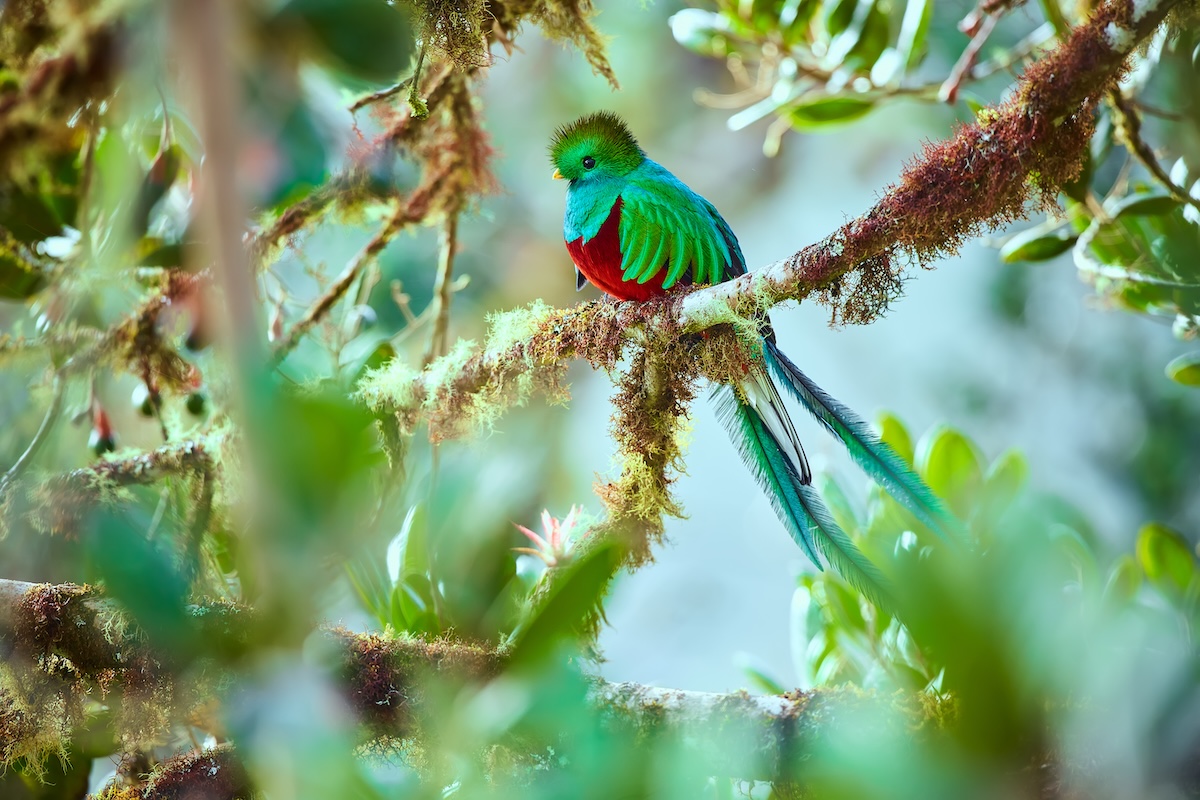
Costa Rica’s reputation among birdwatchers borders on mythological — and it earns it. Despite being smaller than the province of Nova Scotia, Costa Rica is home to over 900 bird species, a density of avian life that routinely overwhelms even experienced birders on their first visit. The variety spans cloud forest canopy and Pacific shoreline, lowland rainforest and highland páramo. Wherever you are, something extraordinary is usually within range.
Here are the species that belong on every spotter’s list.
Resplendent Quetzal
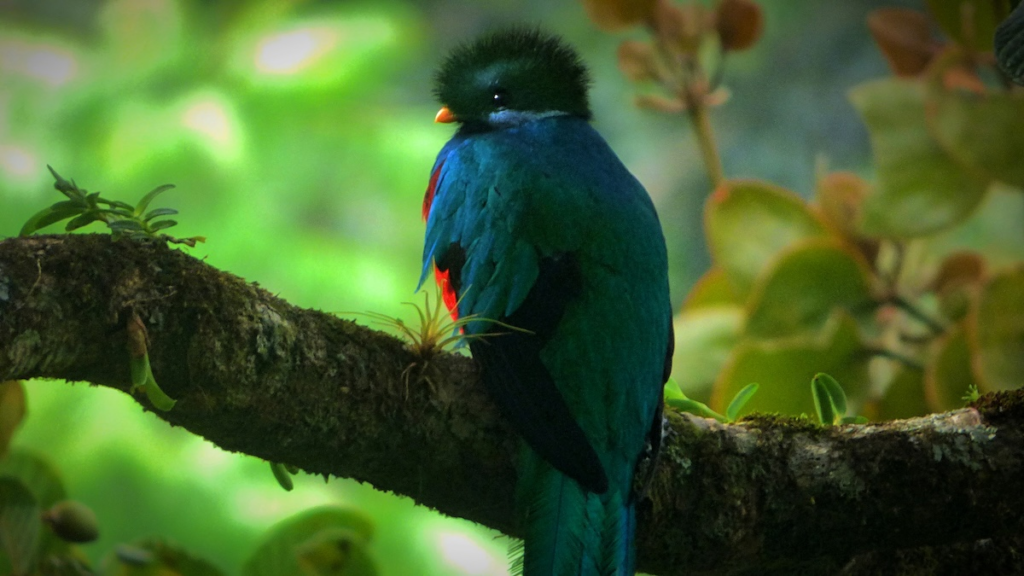
No bird in Costa Rica carries more weight — historically, culturally, or visually — than the quetzal. Ancient Mesoamerican civilizations revered it as a symbol of freedom and divinity, and the bird holds up its end of that mythology. The male’s plumage is an almost implausible combination of iridescent emerald green and vivid crimson, and his tail feathers can trail up to 30 inches behind him in flight. Finding one perched in the mist of a cloud forest is the kind of sighting birders plan entire trips around.
The best locations to spot this bird throughout the country are known by expert local guides, with February through July (breeding season) offering the strongest chances. Sightings are never guaranteed, which is precisely what makes them so affecting when they happen.
Scarlet Macaw
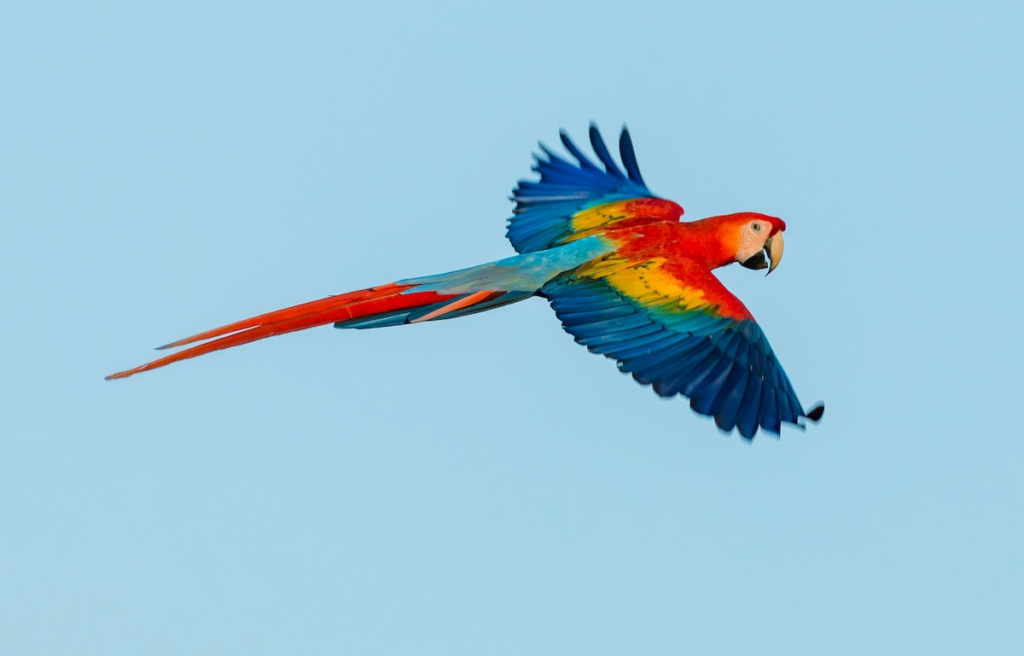
You’ll almost certainly hear them first. The scarlet macaw announces itself with a loud, far-carrying call before it appears, and when it does, the visual impact is immediate — a blazing sweep of red, blue, and yellow crossing the open sky. The color combination looks almost too vivid to be real, yet here it is, built by evolution rather than imagination.
Macaws are common along the Osa Peninsula and the Central Pacific coast, typically seen in pairs or small family groups moving between feeding sites in the early morning. Worth noting: they can live up to 50 years, meaning the birds passing overhead today may have been flying this same route for decades.
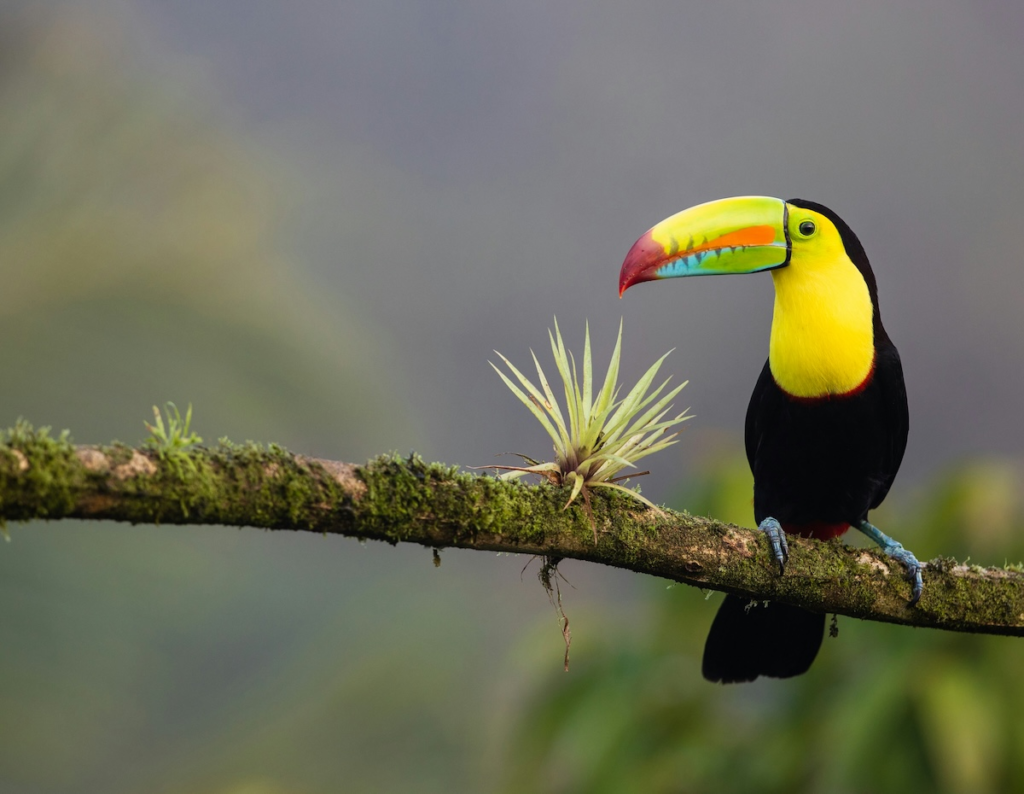
Keel-Billed Toucan
If the quetzal is Costa Rica’s most revered bird, the toucan is its most recognizable. The keel-billed species found here takes the familiar silhouette to its logical extreme — an enormous, rainbow-colored bill that looks structurally improbable but is, in fact, surprisingly lightweight. The bird handles it with real precision when feeding, picking fruit with a delicacy that seems at odds with the bill’s scale. Look for them at rainforest edges and in cloud forest, often perched high and conspicuous.
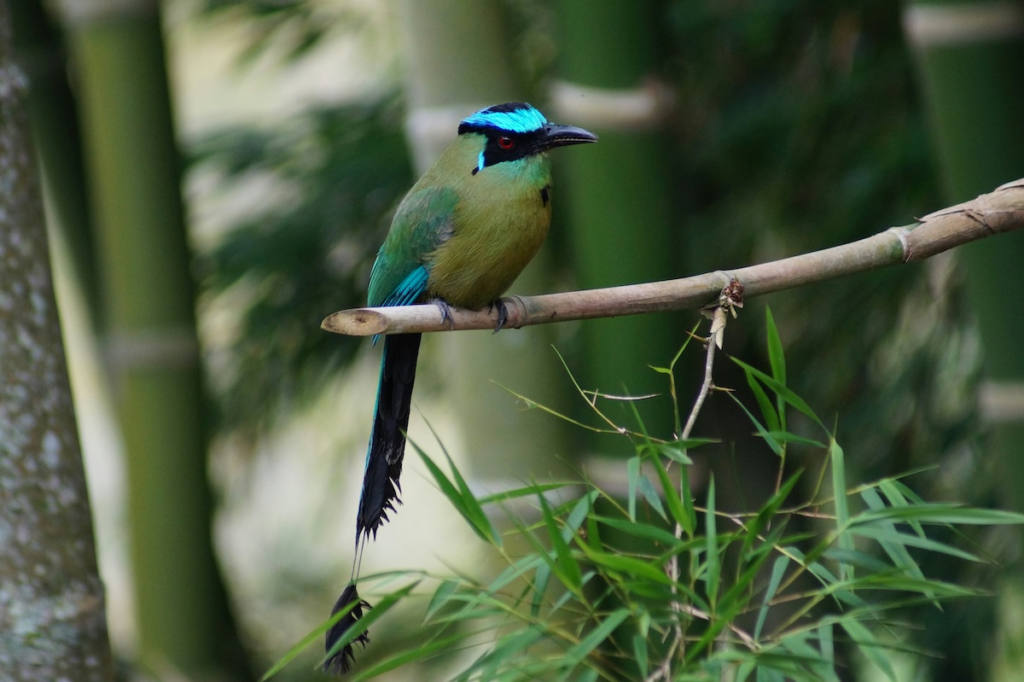
Blue-Crowned Motmot
Slower-paced birdwatchers tend to develop a particular affection for the motmot. It is a bird that sits still in the middle layers of the forest, unhurried, tail feathers swinging gently like a pendulum. It rewards those who’ve learned to look at the places between the canopy and the ground. The blue crown, turquoise body, and racket-tipped tail make identification straightforward. Found across the country, it’s a fixture of the forest understorey and one of the more reliably satisfying sightings for any level of birder.
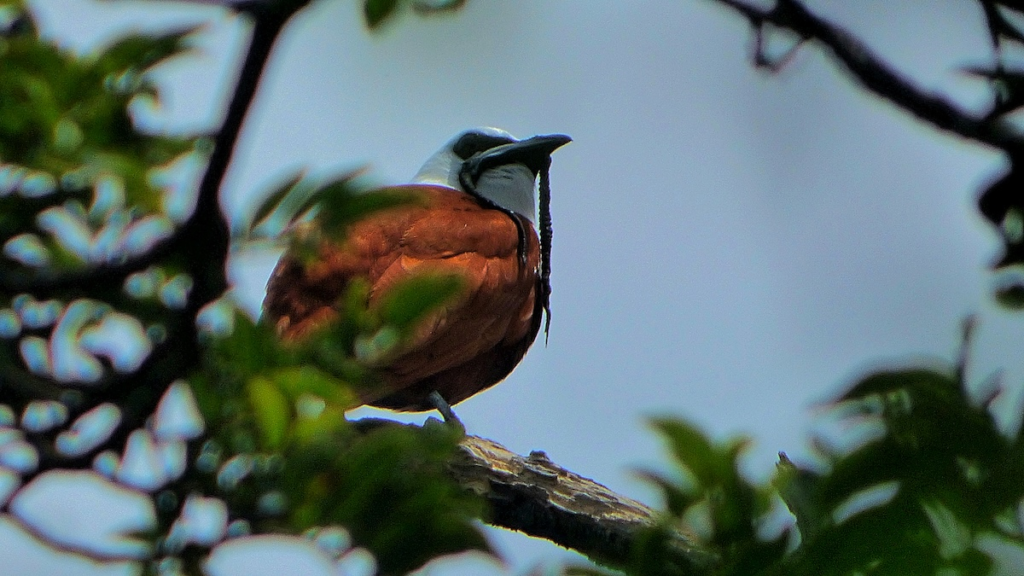
Three-Wattled Bellbird
Deep in the cloud forest, the bellbird makes its presence known before it’s ever seen. The male’s call is a sharp, resonant clang that carries through the trees with startling force. It is in fact among the loudest of any bird species in the world. When you finally locate the source, the three dangling wattles hanging from its bill remove any doubt about the identification. It is an eccentric, charismatic species and one of the defining sounds of Costa Rica’s montane forest.
Mondo’s Birdwatching Expedition moves through Costa Rica’s full range of habitats — from Pacific coast to cloud forest — guided by expert naturalists with deep knowledge of where and when each species can be found. Whether you’ve been keeping lists for years or you’re raising binoculars for the first time, the birds of Costa Rica are worth looking for.