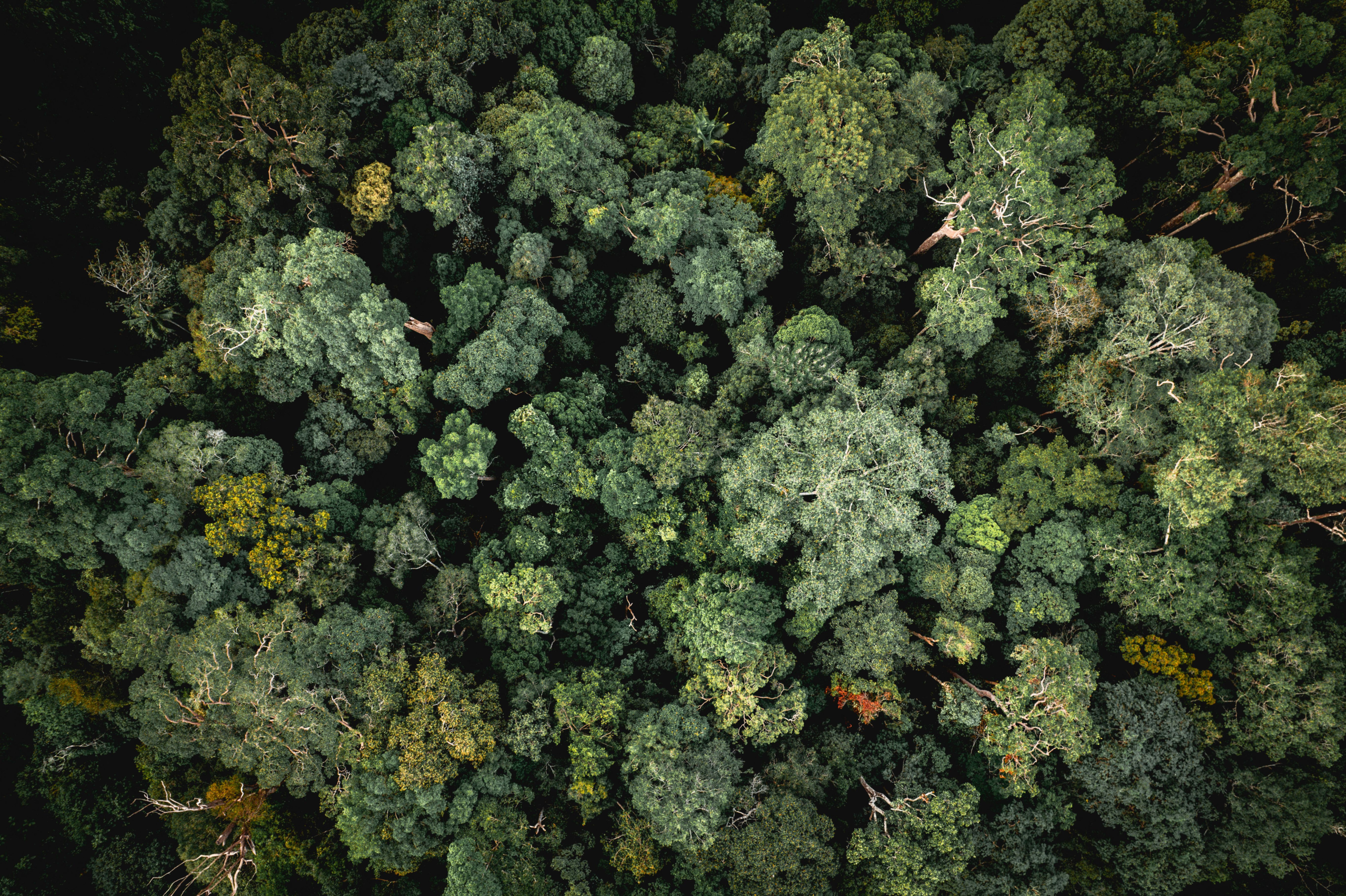
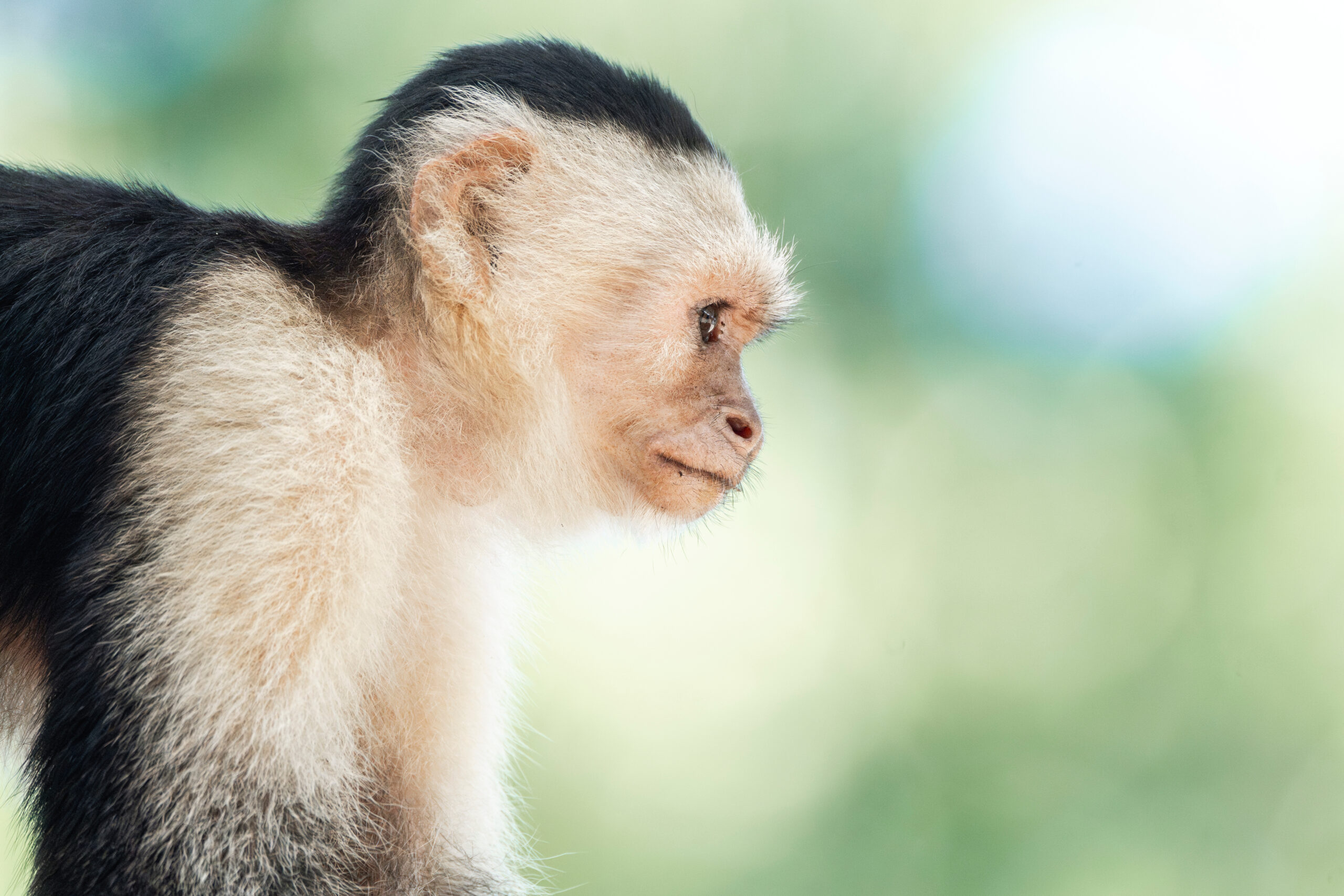
Few wildlife encounters are as memorable as spotting monkeys in their natural habitat. Whether it’s the unmistakable roar of a howler monkey echoing through the rainforest at dawn or a troop of white-faced capuchins curiously watching from the trees, monkeys are among Costa Rica’s most charismatic and beloved animals.
Costa Rica is home to four monkey species, each with its own unique appearance, behaviour, and role within the ecosystem. Spending time in the country’s protected forests greatly increases your chances of encountering these fascinating primates, and getting to know a bit about each one only makes the experience richer.
Mantled Howler Monkey
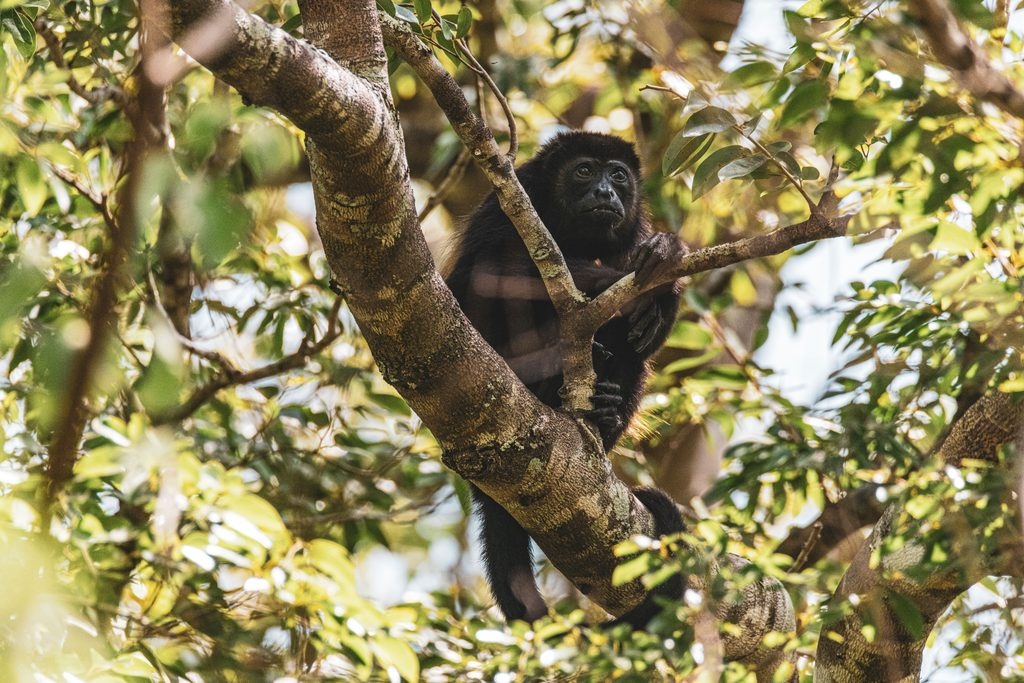
For many visitors, the first monkey they experience is heard long before it’s seen.
Mantled howler monkeys are famous for their deep, booming calls, which can travel up to five kilometres through the forest — helping troops communicate and defend territories without direct confrontation. These calls are most common at dawn and dusk, when troops announce their presence to neighbouring groups across the canopy. Despite their intimidating voices, howlers are surprisingly relaxed animals. Their diet of leaves, fruits, and flowers allows them to conserve energy by resting high in the canopy for much of the day, making them one of the easier species to spot once you know where to look.
Central American Spider Monkey
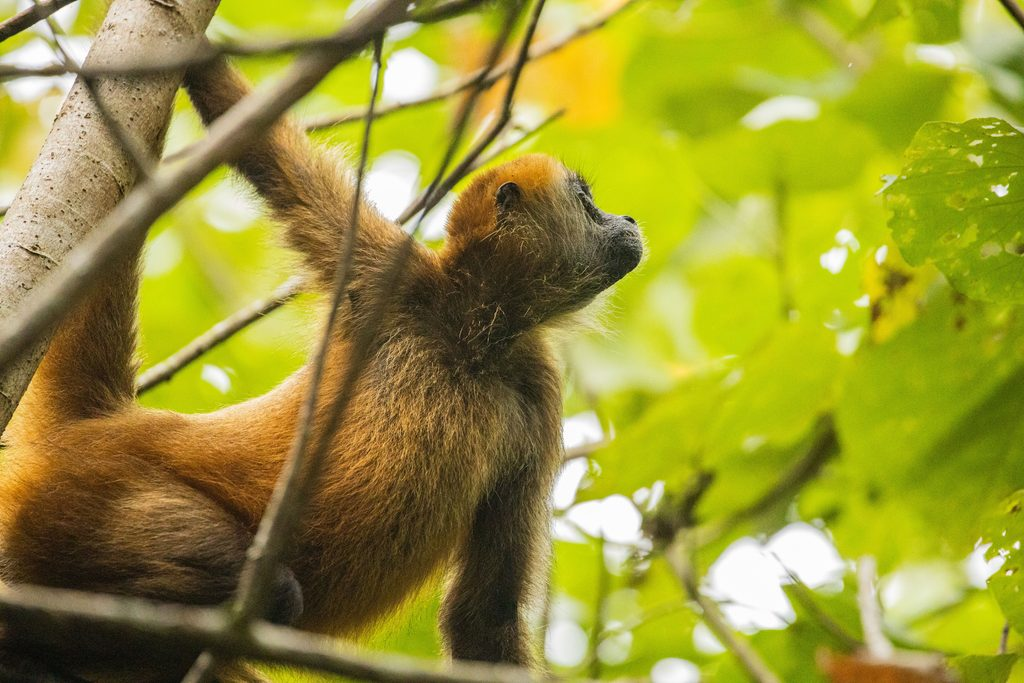
Spider monkeys are the athletes of the rainforest. With long limbs, slender bodies, and remarkably strong prehensile tails, they swing effortlessly through the canopy with incredible agility, often covering long distances without ever touching the ground. Highly social primates, they typically live in large groups that break into smaller foraging parties throughout the day, regrouping later to rest or travel together.
Their fruit-heavy diet makes them important seed dispersers, helping regenerate tropical forests. Spider monkeys also require large, healthy, connected forests to survive — making them a key indicator of overall ecosystem health, and one of the species conservationists watch most closely.
White-Faced Capuchin Monkey
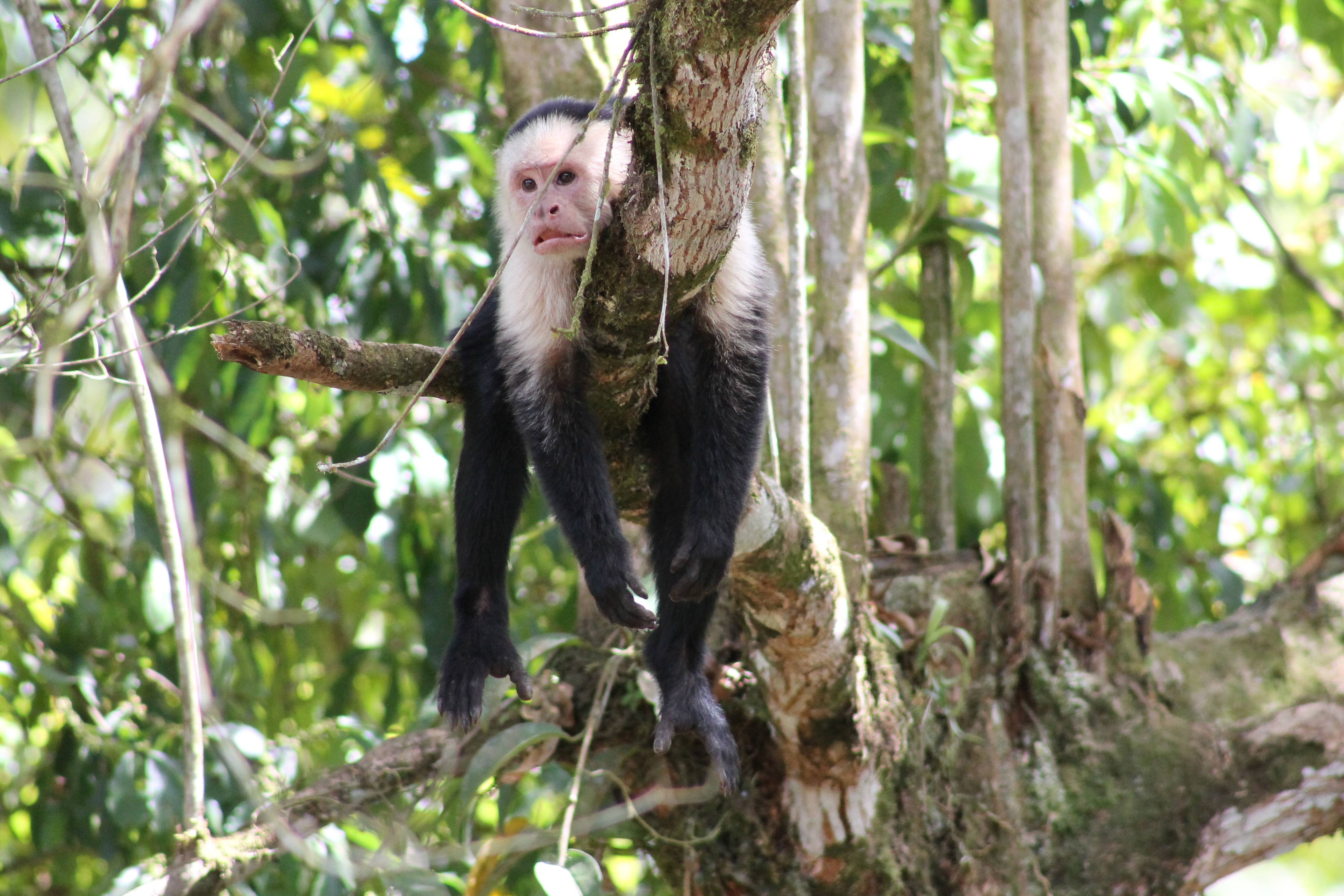
Curious, intelligent, and endlessly entertaining, white-faced capuchins are the problem-solvers of the rainforest. These adaptable monkeys use teamwork to locate food, care for young, and defend their groups, with a varied diet that includes fruits, insects, small vertebrates, eggs, and even shellfish along coastal areas. Some populations have even been observed using tools to access hard-to-reach food.
Their inquisitive nature makes them one of the easiest species to observe — though it’s important to remember they’re wild animals. Feeding or approaching them too closely can alter their natural behaviours and negatively impact their health, so admiring them from a respectful distance is always best.
Central American Squirrel Monkey
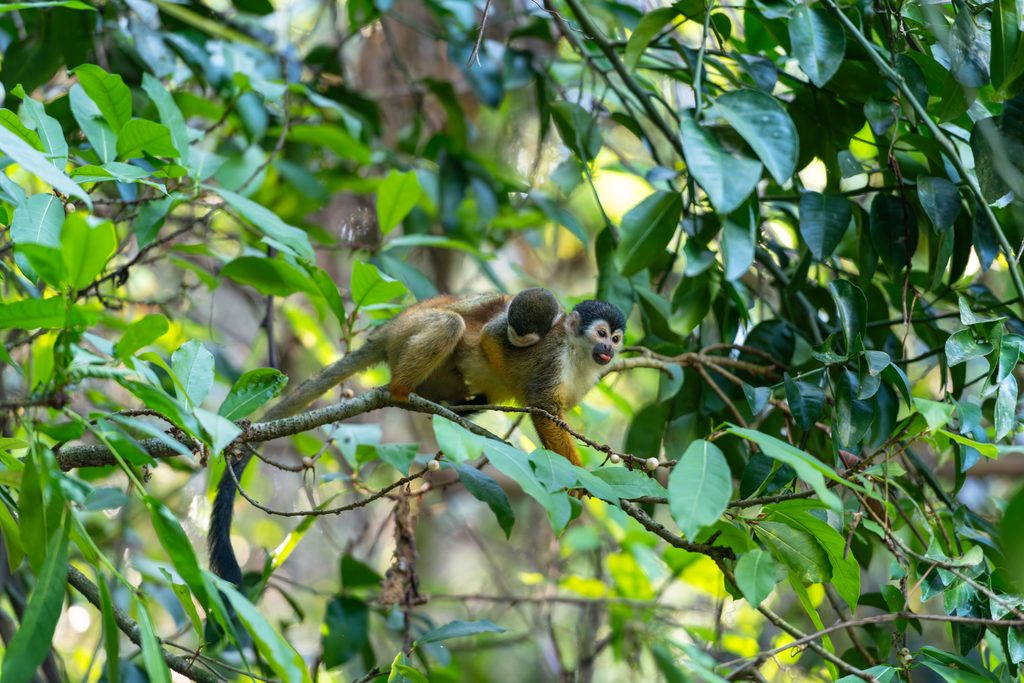
The smallest of Costa Rica’s monkey species is also its rarest. Found only in limited areas along the Pacific coast, squirrel monkeys are a highly sought-after sighting for wildlife enthusiasts. These energetic primates travel in large troops of up to several dozen individuals, spending their days actively searching for insects, fruits, and small animals with remarkable speed and agility. Habitat fragmentation has made them an important focus of conservation efforts across the country, with several initiatives working to reconnect the forest corridors they depend on.
More Than Charismatic Wildlife
Monkeys do far more than entertain visitors — they play essential roles in maintaining healthy forests. By consuming fruit and moving through the canopy, they disperse seeds across large distances, acting as gardeners of the rainforest and supporting the regeneration of tropical ecosystems for generations to come.
At Mondo Eco-Expeditions, participants explore habitats where all four monkey species can be found, guided by experienced naturalists who bring each species’ story to life — and help explain why protecting these primates means protecting entire ecosystems.