Costa Rica is celebrated for its rainforests and cloud forests, but some of its most remarkable conservation stories unfold along its coastlines. Every year, thousands of sea turtles return to nest on the country’s beaches, continuing a journey that has remained largely unchanged for over 100 million years.
Watching a sea turtle emerge from the ocean under cover of darkness is an unforgettable experience. These ancient mariners travel thousands of kilometres across open ocean before returning — often to the very beach where they hatched — to lay the next generation of eggs. Costa Rica is one of the few countries where five of the world’s seven sea turtle species can be found, making it a globally significant destination for marine conservation and wildlife research.
Leatherback Sea Turtle
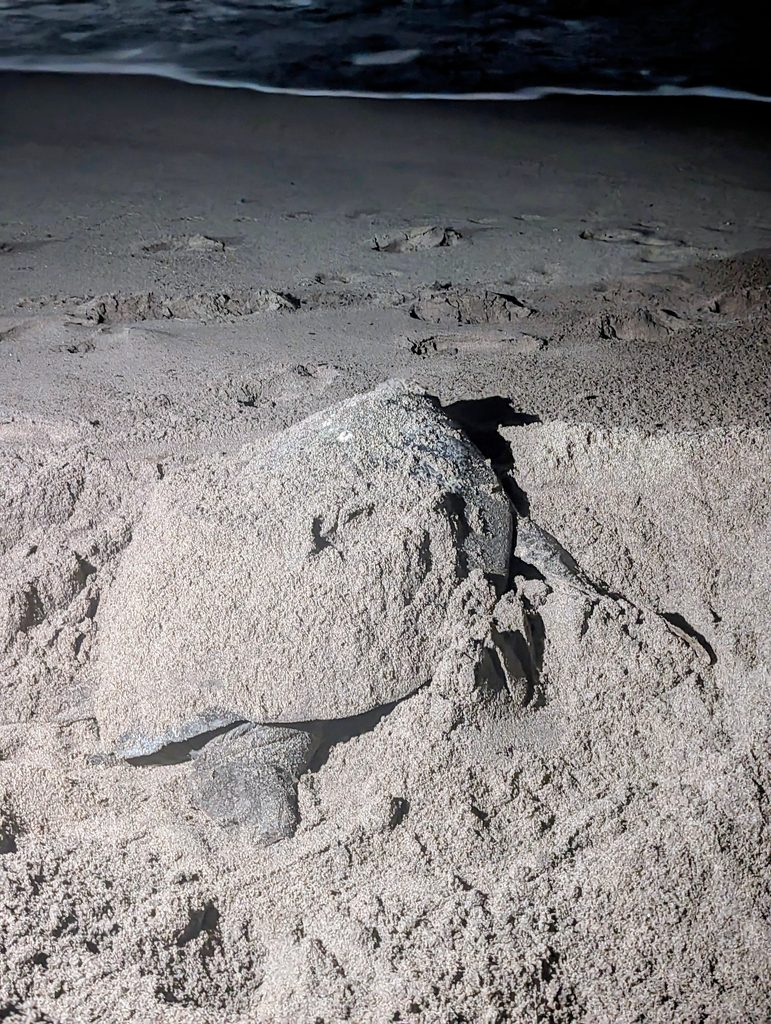
The leatherback is the largest sea turtle on Earth. Adults can exceed two metres in length and weigh more than 600 kilograms. Unlike other sea turtles, they lack a hard shell — their backs are covered by thick, leathery skin that helps them dive over 1,000 metres in search of jellyfish. Costa Rica’s Caribbean coast hosts one of the most important leatherback nesting populations in the Western Hemisphere.
Green Sea Turtle
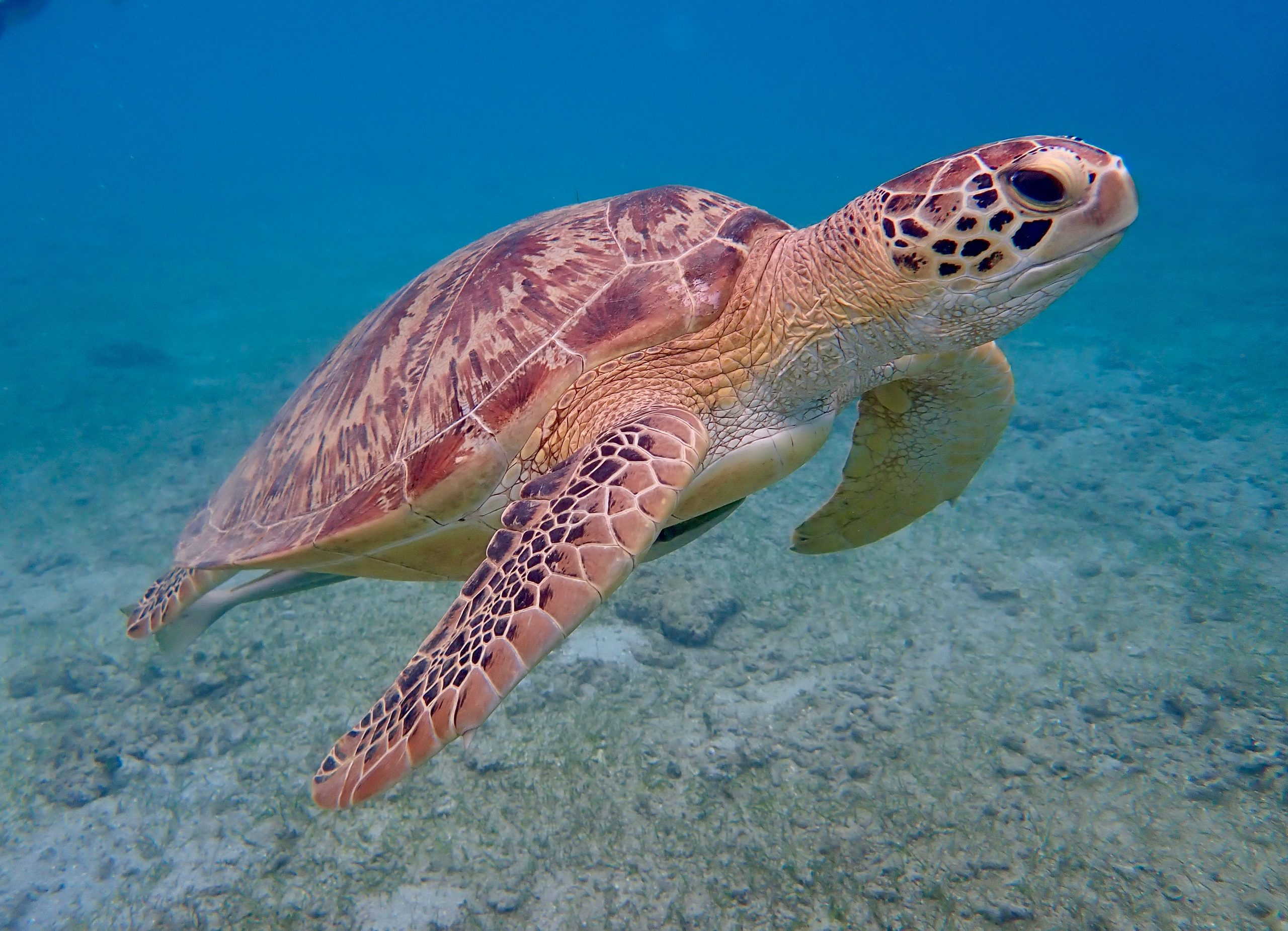
Named for the greenish colour of the fat beneath their shells, green sea turtles are among the most commonly encountered species in Costa Rica. As adults, they feed on seagrasses and algae, playing a vital role in maintaining healthy marine ecosystems. Large nesting populations can be found along the Caribbean coastline, where researchers have studied them for decades.
Hawksbill Sea Turtle
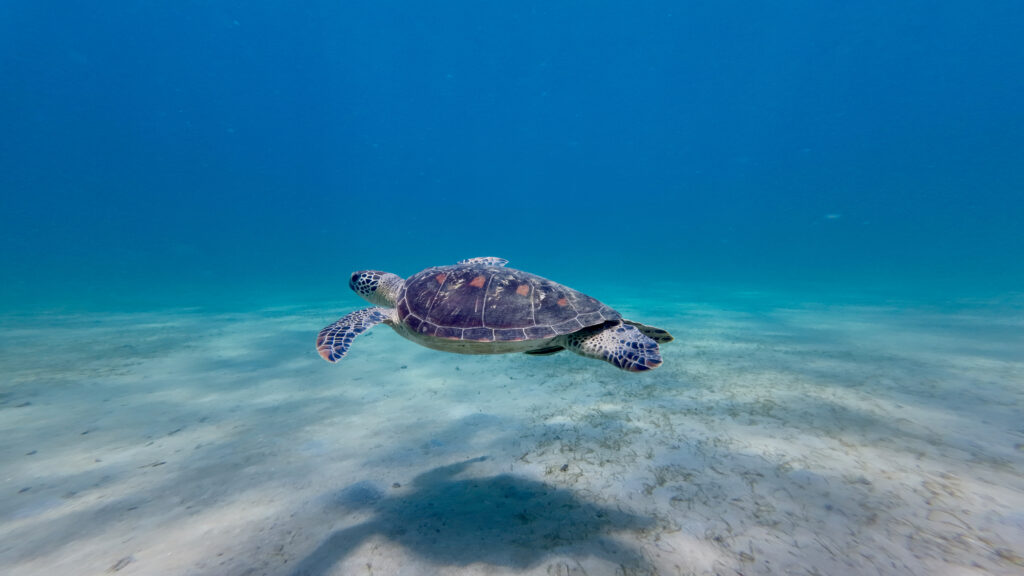
With beautifully patterned shells and narrow, hawk-like beaks, hawksbills are among the most striking sea turtles. Their specialised beaks allow them to feed on sponges within coral reefs, helping maintain reef health and diversity. Sadly, they’re also among the world’s most endangered sea turtles, largely due to the historic tortoiseshell trade and ongoing habitat loss.
Olive Ridley Sea Turtle
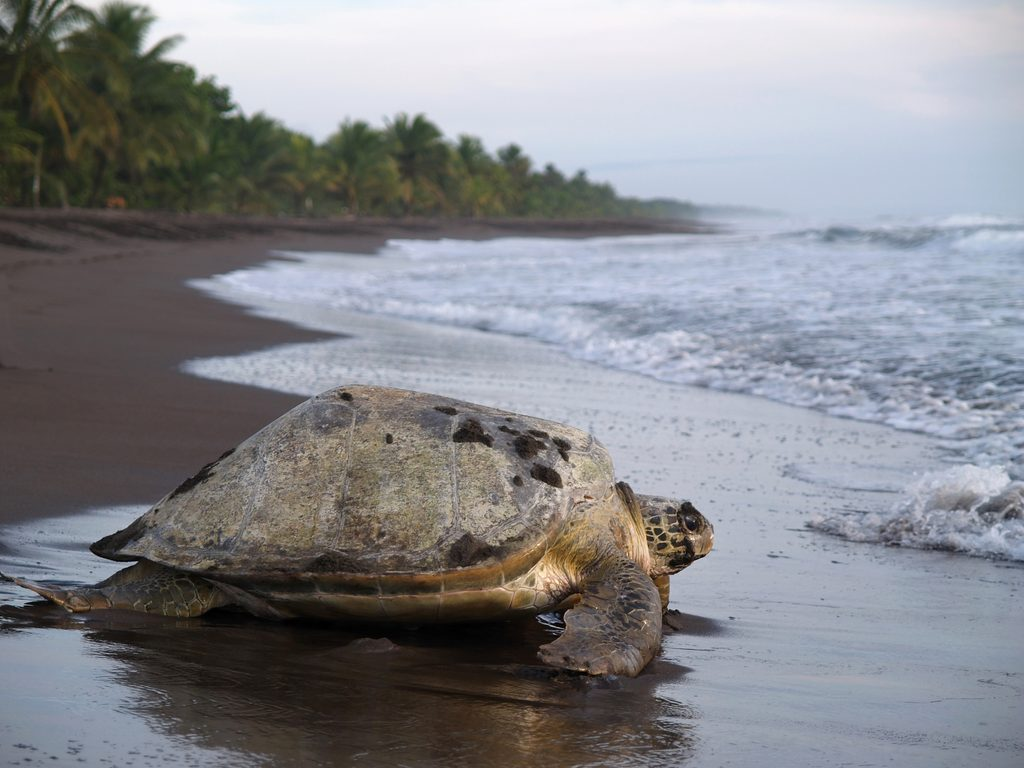
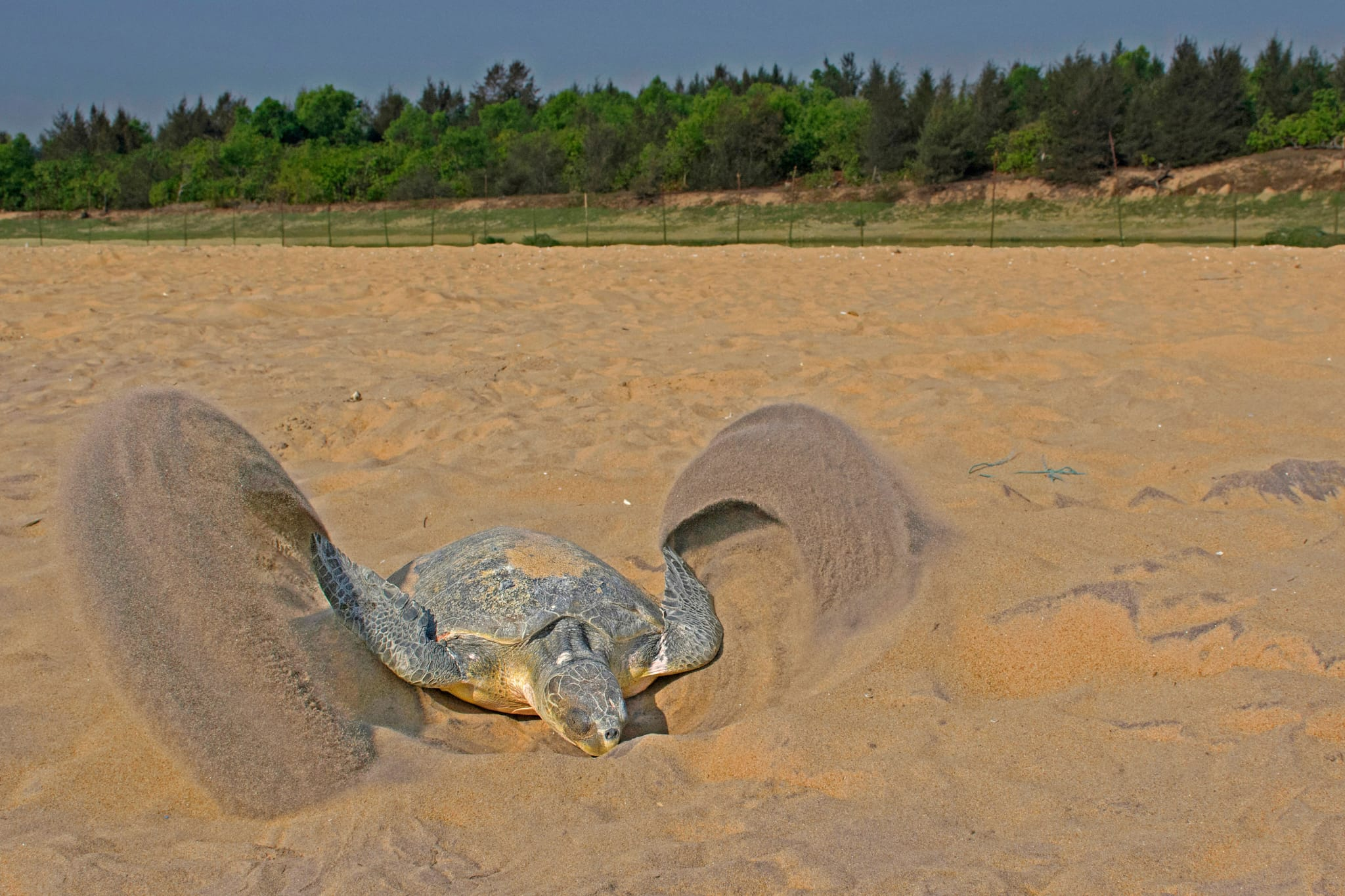
The olive ridley is perhaps Costa Rica’s most famous sea turtle, thanks to a phenomenon known as an arribada — when tens of thousands of females come ashore over just a few nights to nest on the same beach. Costa Rica’s Pacific coast hosts some of the largest arribadas on the planet, making it one of the best places anywhere to witness this extraordinary spectacle.
Loggerhead Sea Turtle
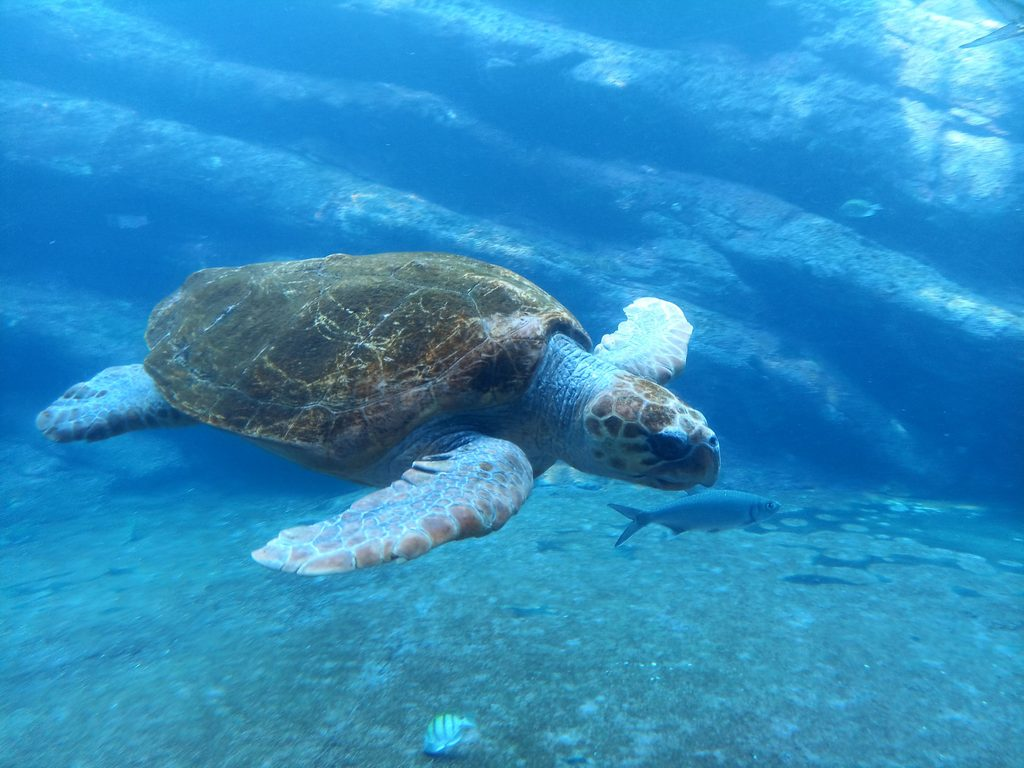
Less common than the other species, loggerheads visit Costa Rican waters with their large heads and powerful jaws, feeding on crabs, molluscs, and other hard-shelled prey. Because they migrate across entire ocean basins, protecting them requires international cooperation.
Protecting These Ancient Ocean Travellers
Despite surviving for millions of years, sea turtles now face threats from plastic pollution, fishing gear, climate change, and coastal development. Costa Rica has responded by becoming a global leader in sea turtle conservation through protected beaches, scientific monitoring, and community-based initiatives.
At Mondo Eco-Expeditions, participants explore these marine environments firsthand — observing nesting activity, studying coastal ecosystems, and supporting the conservation work that gives these ancient reptiles a fighting chance.